

Google has pushed out another spam update, and it’s already moving through search results.
It started rolling out on 24 March 2026 and is now fully completed, according to the Google Search Status Dashboard. That shorter rollout window matters. If your rankings shift, you are likely to notice it quickly.
What This Update Is Targeting
This update is aimed at sites that fall outside Google’s spam guidelines.
It is not focused on link spam or reputation signals this time. Instead, it looks at broader spam tactics that try to manipulate search visibility without offering real value.
The update applies across all countries and languages, so no one is outside its reach.
What This Tells You About Where Search Is Heading
Google has been refining its spam detection systems for years. Updates like this are not random. They are part of a steady push towards cleaner, more useful search results.
At the centre of this is their AI-driven system, which continually learns to spot patterns indicative of low-quality or manipulative content.
In simple terms, the gap between what works short-term and what lasts long-term is getting wider.
Why Fully Automated Content Is Becoming Risky
It has never been easier to publish content at scale. There are tools, plugins, and systems that can generate entire blogs in seconds. On the surface, it looks like an easy way to build traffic.
The issue is not AI itself. It is the lack of control and input behind it.
When content is published without review, without real knowledge, and without any thought for the reader, it tends to follow the same patterns. It becomes thin, repetitive, and easy for search engines to pick up. That is exactly the type of content that updates like this are designed to address.
If your approach relies on pushing out large volumes of automated content with no real involvement, you are building on weak ground.
Used properly, AI can support research, structure, and ideas. What it cannot replace is experience, judgement, and the ability to write something that actually helps the person reading it.
What Happens If Your Site Is Hit
If you see a drop in rankings after this update, it usually points back to compliance.
Pages that violate Google’s guidelines can lose visibility or disappear from search results. In some cases, it can affect a large portion of a site rather than just a few pages.
Fixing the issue is not instant. Even after making changes, it can take months for systems to reassess your site and reflect any improvements. That delay catches a lot of people off guard.
What You Should Be Looking At Right Now
If you want to stay stable through updates like this, your focus needs to be clear.
Look at your content honestly:
- Does it answer real questions in a useful way?
- Is it written with intent, or just to fill space?
- Would someone trust it if they landed on it for the first time?
If the answer is not clear, that is where the work needs to be done. Strong SEO is built over time. It is based on consistency, clarity, and giving people a reason to stay on your site.
Where This Leaves Your SEO Strategy
Updates like this do not punish good work. They expose weak strategies. If your site is built around helpful content, clear structure, and a genuine understanding of your audience, you are far less likely to see negative impact.
If it is built on shortcuts, automation without oversight, or content created purely for rankings, it becomes harder to maintain position.
The direction is clear. Search is moving towards quality that can be recognised and trusted.
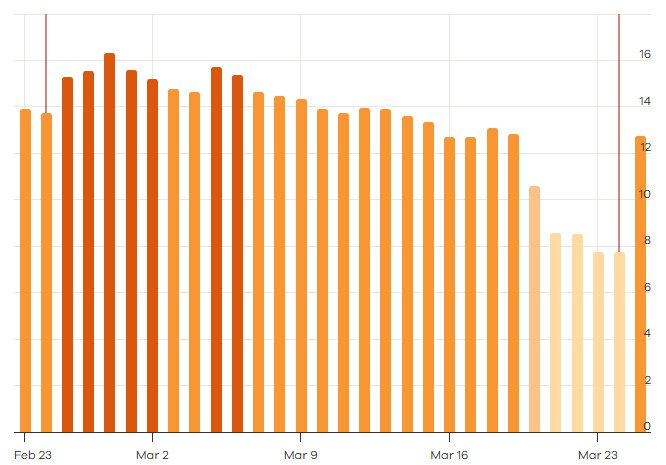
Here’s What The Tools Are Showing
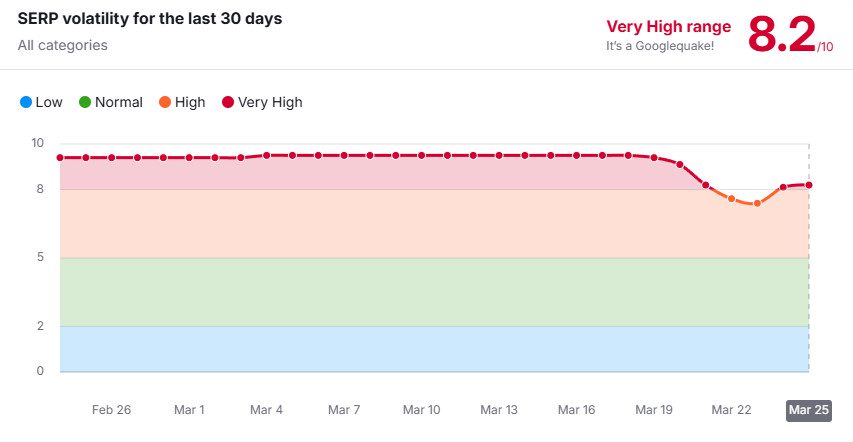
SemRush Sensor
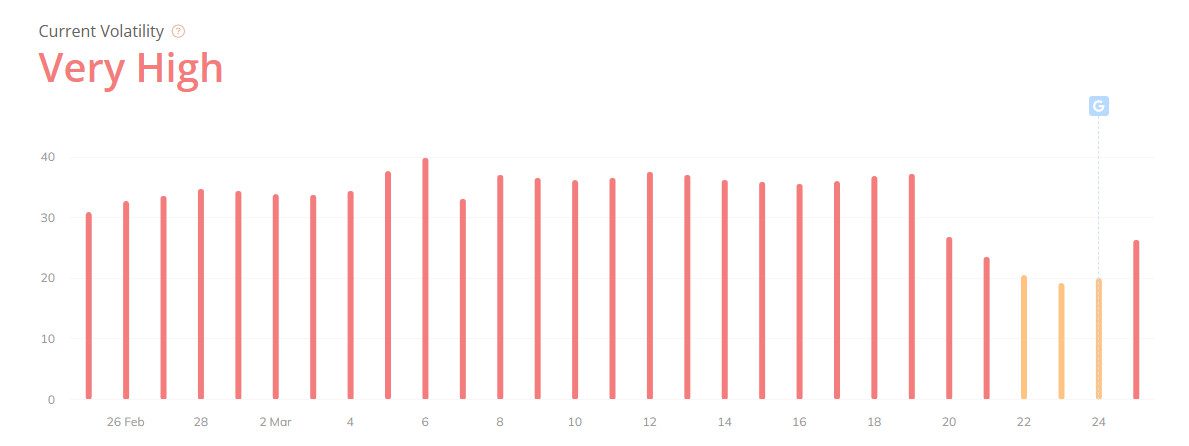
Wincher SERP Volatility Index
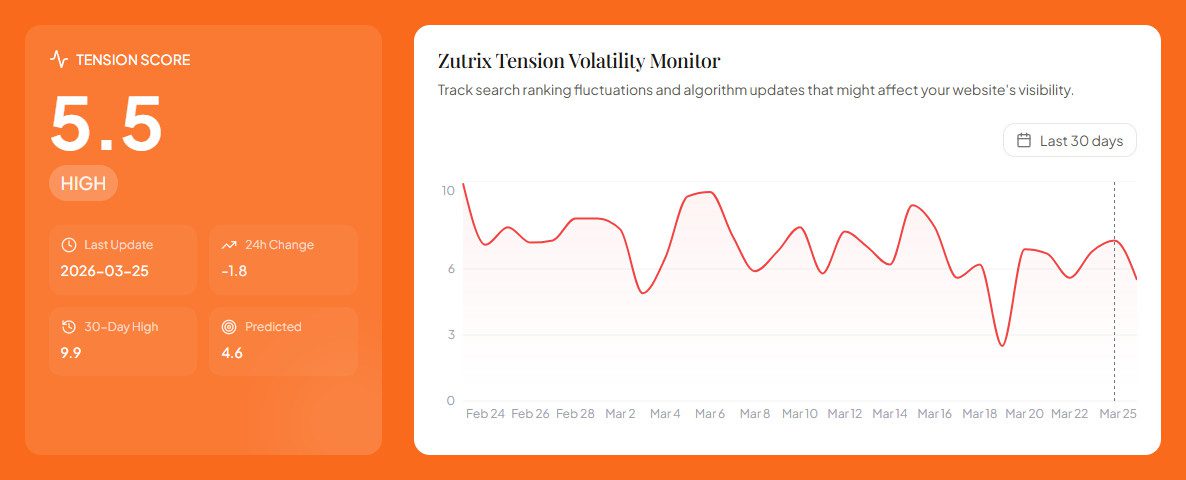
Zutrix
Accuranker
Want To Stay Ahead Of Google Updates?
Keeping up with changes like this is not easy if you are not watching it closely.
At Outrank, we help businesses build SEO strategies that hold their own through updates and continue to generate leads.
If you want a clearer picture of how your site is performing and where it can improve, get in touch and let’s take a proper look.