
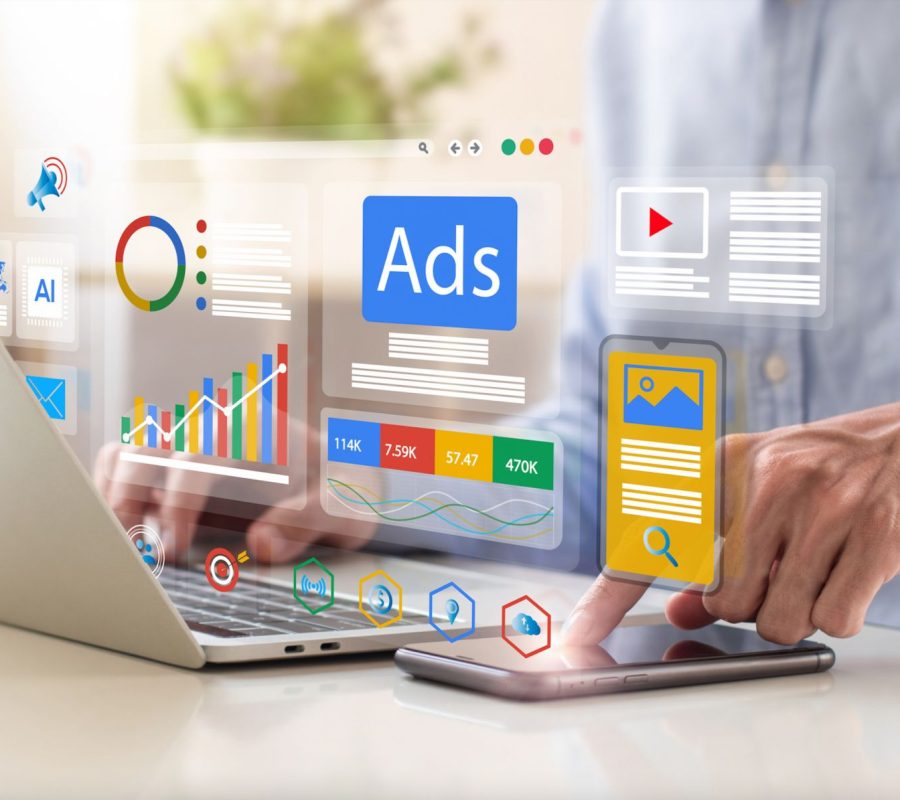

Digital growth in 2026 looks very different from even two or three years ago.
For UK SMEs, the opportunities are still enormous, but the environment has become more competitive, more complex and far less forgiving of disconnected strategies. The businesses that are thriving are not necessarily the biggest, they are the ones that have adapted.
So where do things really stand?
Search Has Changed, But Visibility Still Matters
Search is no longer just about rankings.
With Google integrating AI-driven results into search pages, users now see summarised answers, richer snippets and more dynamic content experiences before they even click through to a website. That has understandably made many SME owners nervous about future visibility.
However, organic visibility still drives serious commercial value, the difference in 2026 is that clarity, authority and structured content matter more than ever. Businesses that treat SEO as a box-ticking exercise are struggling. Businesses that invest in quality content, technical performance and strong positioning are still winning attention.
The rules have evolved, but the opportunity remains.
Paid Media Is Smarter and More Competitive
Automation in platforms like Google Ads and Meta has improved dramatically. Campaigns can optimise faster, audiences can be refined in real time and data insights are stronger than ever.
But this has also raised the bar.
When everyone has access to similar automation tools, competitive advantage no longer comes from pressing the right buttons. It comes from messaging and offering strength and conversion experience.
In 2026, paid media success is less about technical setup and more about commercial clarity. Businesses that understand their margins, customer lifetime value, and acquisition costs outperform those that chase vanity metrics.
Efficiency beats volume.
AI Is Now Embedded, Not Optional
AI is no longer an emerging trend, it is part of the infrastructure.
From content research to campaign optimisation and data analysis, AI supports almost every stage of digital marketing, including AI SEO. The key shift in 2026 is that the conversation has moved away from ‘Should we use AI?’ to ‘How do we use it properly?’
SMEs that treat AI as a shortcut often see limited results; those that integrate it into a wider growth structure see meaningful performance gains.
AI accelerates execution; it does not replace strategy.
The businesses succeeding are the ones using AI to enhance structured systems rather than replace them.
Conversion Has Become the Real Battleground
Driving traffic has never been easier.
Converting that traffic profitably is where many SMEs struggle.
As competition increases and attention spans shorten, user experience, trust signals, and offer clarity carry more weight. Website speed, mobile optimisation and clear calls to action are no longer nice to have, they are essential.
In 2026, businesses that invest in conversion rate optimisation see stronger returns from both SEO and paid media. Those who ignore conversion leaks quietly lose revenue.
Growth is no longer about doing more, it is about doing better.
Data Is Everywhere, Insight Is Not
SMEs now have access to more data than ever before. Dashboards, attribution tools and platform analytics provide constant streams of information.
Yet many business owners still feel unsure about what the data actually means.
The difference between growing and stagnating often comes down to interpretation. Businesses that align marketing data with commercial objectives gain clarity. Those that track impressions and clicks without tying them to revenue remain reactive.
In 2026, data literacy is a competitive advantage.
The Biggest Challenge is Integration
Perhaps the most significant theme of 2026 is integration.
Many SMEs still operate marketing in silos, SEO runs separately from paid media. Paid media operates separately from sales. Reporting focuses on channel performance rather than overall revenue impact.
This fragmentation creates inefficiency.
The businesses experiencing stable, predictable growth are the ones treating marketing as an integrated revenue engine. Traffic generation, conversion optimisation and commercial objectives are aligned from the start.
When everything pulls in the same direction, performance improves naturally.
What Does This Mean for UK SMEs?
The landscape is more advanced, but it is also more transparent.
Tactical marketing alone no longer delivers sustainable growth. Businesses must understand their numbers, refine their positioning and build structured systems that adapt to change.
The encouraging part is that size is no longer the deciding factor. Smaller, agile SMEs can outperform larger competitors if they move decisively and strategically.
Digital growth in 2026 rewards clarity, It rewards consistency and it rewards integration.
The businesses that succeed are not the ones chasing every platform update or new tool. They are the ones building solid foundations and strengthening them over time.
The Opportunity Ahead
For UK SMEs willing to adapt, 2026 presents a genuine opportunity.
Search still drives intent, paid media still accelerates reach, AI still improves efficiency and data still provides insight.
But sustainable growth now depends on how well these elements work together. The state of digital growth is not unstable. It is evolving.
And evolution favours the prepared.
If you are serious about scaling in 2026, the focus should not be on adding more channels or tools. It should be on strengthening your structure, aligning your strategy and ensuring every part of your marketing supports measurable commercial outcomes, you can find out more in our guide here – How AI Search Really Works.
Because when your foundations are strong, change becomes an advantage rather than a threat.
If you want to scale in 2026, stop thinking in channels and start thinking in systems. Contact the Outrank team and let’s turn your marketing into a single, integrated revenue engine that drives real growth.