
Being good at what you do does not automatically mean local customers will find you online.
For businesses that operate across specific towns, cities or regions, this can create a frustrating problem. Someone nearby may be actively searching for exactly the service you provide, yet Google can still show them a competitor whose website makes its services and locations easier to understand.
That is why local SEO for local businesses matters.
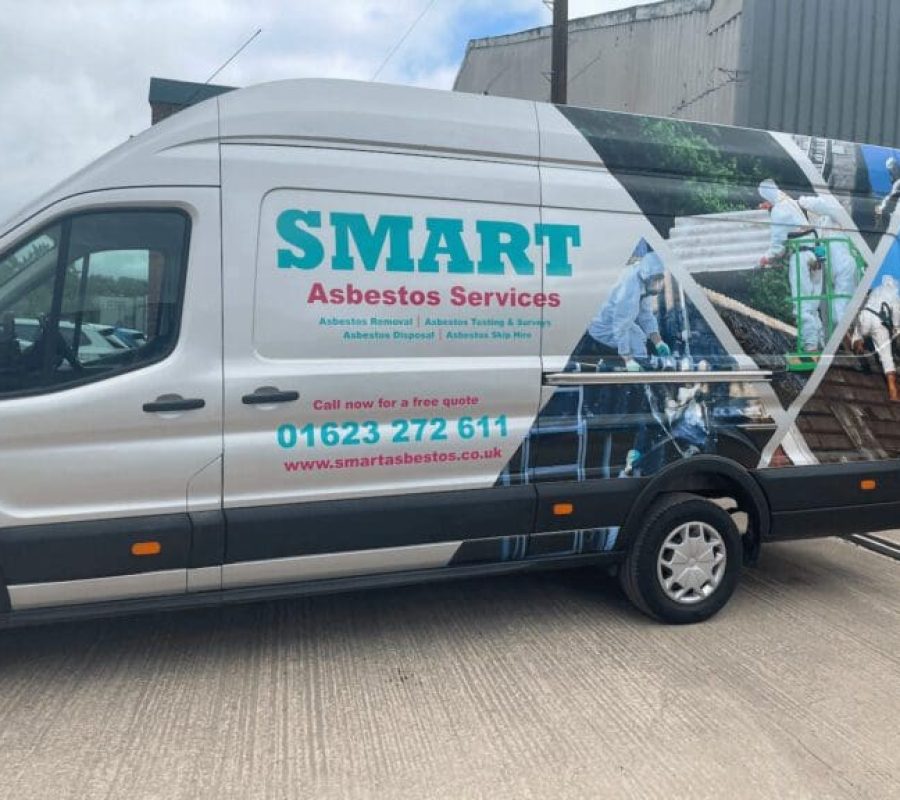
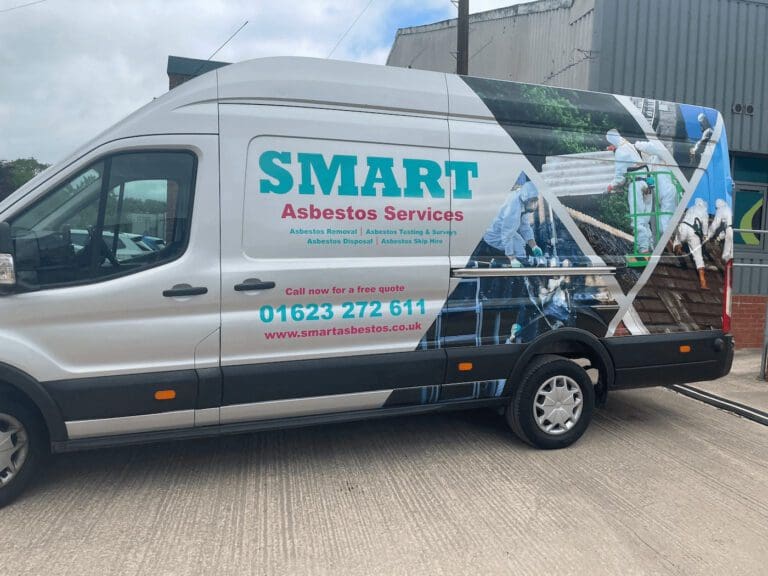
Smart Asbestos Services provides a useful example. The company carries out asbestos surveys, testing, removal, collection and disposal across Nottinghamshire and the wider East Midlands. Its customers are rarely searching for a generic explanation of asbestos: instead, they are often looking for a particular service because they have an immediate problem they need to solve.
Making that connection clear to search engines and customers became an important part of the website.
Why did local search matter to Smart Asbestos Services?
Asbestos services are naturally location-led.
A homeowner in Derby who has discovered an old asbestos garage roof is unlikely to begin by searching for a company anywhere in Britain. They are more likely to search for phrases such as:
- Asbestos removal in Derby
- Asbestos survey near me
- Asbestos testing in Mansfield
- Asbestos disposal Nottingham
- Asbestos garage removal near me
Each search has a geographical element, even when the person does not explicitly type a town or city into Google.
Google itself explains that local results are largely influenced by relevance, distance and prominence. In simple terms, search engines need to understand what a company does, where it provides that service and whether it appears to be a credible result for the search.
For Smart Asbestos Services, that meant the website needed to communicate more than simply “we remove asbestos”.
It needed to clearly connect specific asbestos services with the areas in which customers could use them.
What was the local SEO challenge?
The challenge was not simply adding town names to existing pages.
Good local search optimisation needs to reflect the way customers actually search.
A person who needs asbestos testing has a different problem from somebody who already has asbestos waste ready for disposal. Someone researching an asbestos survey before buying a property is at a different point in their journey from a homeowner who needs a garage roof removed.
This means that the website had to make both parts of the search clear:
What does the customer need, and where do they need it?
That distinction matters for almost every local service business. A roofing contractor may offer repairs, replacements and flat roofing. A locksmith may deal with emergency lockouts, uPVC locks and commercial security. One generic page cannot always answer every combination of service and location well.
How can you optimise a website for local search?
The Smart Asbestos Services approach shows why local optimisation works best when the whole website supports it rather than relying on one heavily optimised page.
Build clear pages around your main services
The first job is making individual services easy to understand.
Smart Asbestos Services has dedicated information covering asbestos surveys and testing, residential asbestos removal, asbestos skip hire and asbestos waste disposal.
That gives search engines clearer information about each part of the business and, more importantly, gives customers somewhere relevant to land.
Someone researching testing does not need to work through paragraphs about skip hire first. They can go directly to the information that answers their question.
This service structure also creates a stronger foundation for location-focused content.
Create useful pages for the areas you genuinely serve
Location pages can help businesses appear for searches involving individual towns and cities, but only when those pages are genuinely useful.
Changing “Nottingham” to “Derby” several times and publishing an otherwise identical page gives the customer little extra value.
A stronger page explains the services available in that area, answers locally relevant questions and connects visitors with real examples of work.
Smart Asbestos Services, for example, has dedicated local visibility around areas such as Derby alongside its Nottinghamshire base. Its Derby content connects asbestos removal and survey information with completed work from the surrounding area rather than treating the place name as an SEO add-on.
That makes the page useful for someone actually looking for asbestos services there.
Why is local SEO important for local businesses?
Local SEO helps businesses appear when nearby customers search for the services they provide. It helps search engines understand what the business does, where it operates and which searches its website is relevant to. For local companies, this can improve visibility in location-based organic results and Google Maps while connecting the business with people who are actively looking for a nearby supplier.
The key is relevance. Local SEO is not about attracting as many website visitors as possible. It is about being found by the people who could realistically become customers.
Local case studies can strengthen local search relevance
One particularly useful part of the Smart Asbestos Services website is its collection of completed asbestos projects and case studies.
These serve two purposes.
For a customer, they provide reassurance. Instead of simply reading that a company carries out asbestos removal, they can see examples of the type of work completed.
For search engines, case studies add genuine connections between services and places.
The Smart Asbestos Services website includes recent work involving locations such as Arnold, Stapleford, Southwell, Ilkeston, Ravenshead, Sherwood, Newark and Mansfield.
Those are real projects rather than town names added solely for SEO.
For any local business, project pages can naturally answer questions such as:
- What type of work do you carry out?
- Do you work in my area?
- Have you completed jobs like mine before?
- What was involved?
- What happened once the work was finished?
A useful case study can therefore become both a trust asset and part of a wider local content strategy.
How do service pages and location pages work together?
No page should exist in isolation.
A location page may introduce somebody to the business, but they will often need more detailed information before making a decision.
Someone landing on a Derby page might next want to understand how an asbestos survey and testing service works. Another visitor could need information about residential asbestos removal.
Someone who has already removed suitable asbestos materials may instead be comparing asbestos skip hire with taking the waste to an approved asbestos disposal site.
Internal links make those journeys possible.
They also give search engines clearer signals about how pages relate to one another.
That is much more useful than creating isolated pages solely because a keyword tool identified another town-based phrase.
What can other local businesses learn from this?
The same principles apply well beyond asbestos services.
If your customers are concentrated within particular towns, cities or counties, start by looking at your website from their perspective. Ask yourself:
- Can someone quickly tell which areas we cover?
- Does each major service have enough information to stand on its own?
- Are we answering the searches people actually make?
- Do our location pages contain useful local information rather than copied text?
- Can customers see examples of work carried out near them?
- Do related pages naturally link together?
- Is our business information consistent across the website and Google Business Profile?
You do not need to create hundreds of pages. In fact, a smaller number of useful pages are usually preferable to large numbers of thin ones.
Start with the locations that genuinely matter to the business. Build pages that answer real questions. Support them with services, reviews, photographs, projects and other evidence that shows you actually work in those areas.
Local SEO should reflect the real business
The strongest local search strategy usually comes from making the website a better representation of the company itself.
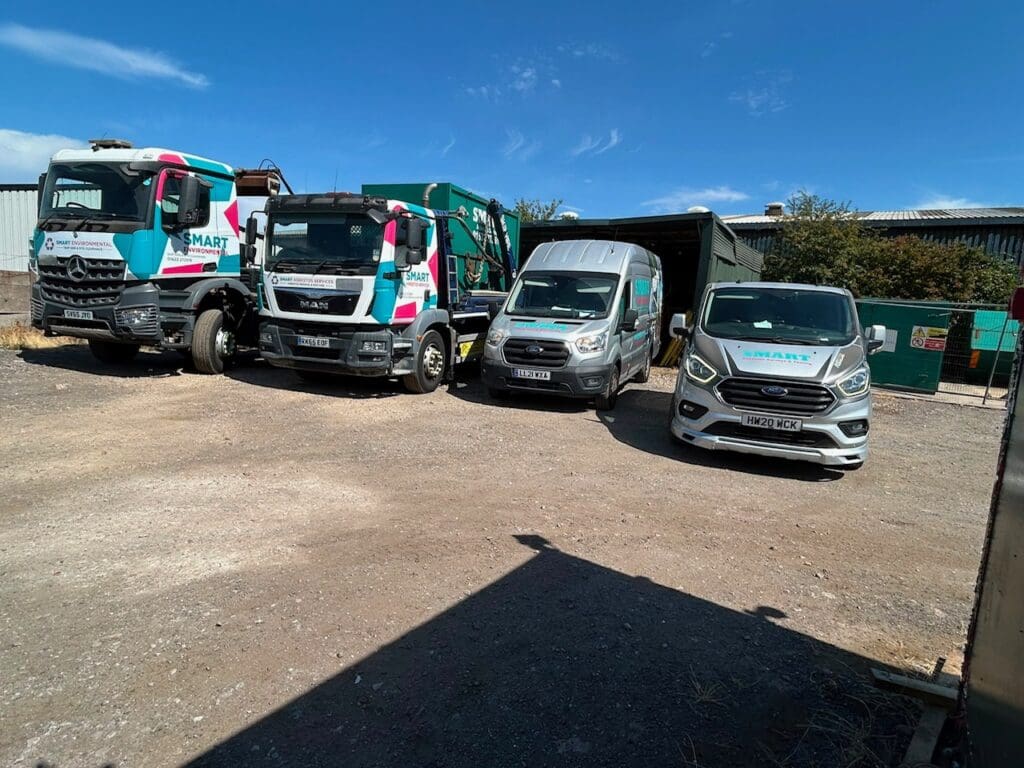
Smart Asbestos Services is based in Nottinghamshire, operates its own asbestos services across the surrounding region and has real completed projects in the towns it wants customers to find it in.
The website should make those relationships obvious.
That is ultimately what local SEO for small businesses should achieve.
It is not about mentioning a location as many times as possible. It is about giving search engines enough clear information to connect the right business with the right search while giving customers enough confidence to take the next step.
Getting found locally starts with being genuinely useful
Smart Asbestos Services shows how service information, local landing pages, project evidence and sensible internal linking can work together to create a website that better reflects where and how a local company operates.
For customers, that means fewer dead ends and clearer answers.
For search engines, it provides stronger context around services and locations.
And for the business, it means the website is built around the same areas and services that matter commercially.