

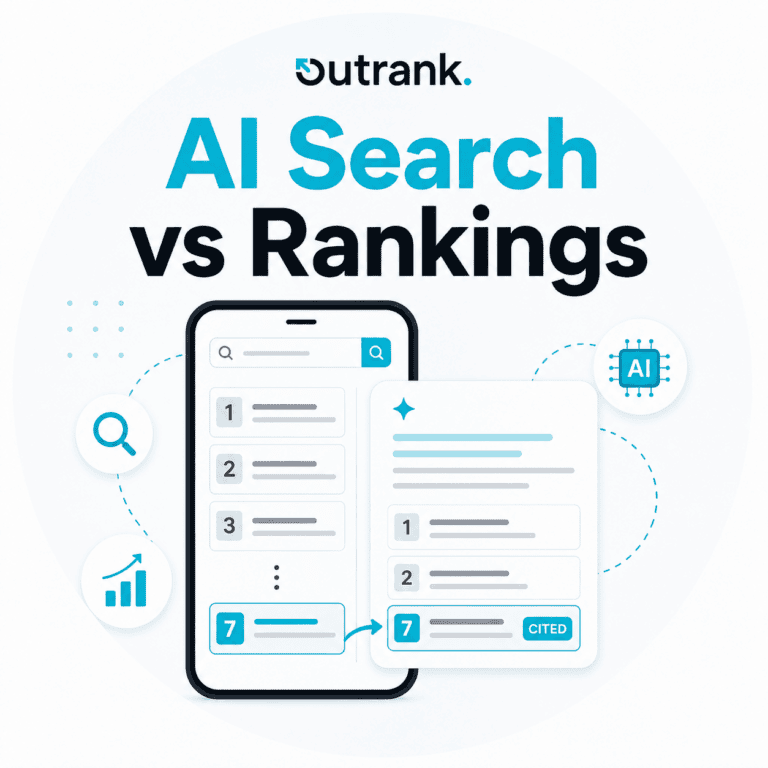
For years, businesses have measured their search visibility by looking at where their website ranks on Google.
Securing a place on the first page remains an important SEO goal. However, the growth of AI Overviews and AI Mode means traditional rankings no longer show the complete picture.
Google’s AI-powered search features can select, summarise and cite sources that do not appear among the standard first-page organic results for the same search.
This creates a new opportunity for businesses, a website may not hold one of the highest traditional rankings, but its content could still appear as a source within an AI-generated answer.
What Does the Latest AI Search Research Show?
A 2026 study examined more than 55,000 trending Google searches across 19 different topic categories.
Researchers found that almost 30% of the websites cited within Google AI Overviews did not appear in the accompanying first-page organic results. The study suggests that source selection within AI Overviews does not always mirror the order of Google’s traditional rankings.
Separate research comparing traditional Google results, AI Overviews and Gemini also found significant differences between the sources returned by each search experience. The researchers reported a low level of overlap and noted that AI-generated search results could change between repeated or slightly reworded searches.
This does not mean conventional Google rankings have stopped mattering. It means businesses now need to consider two connected forms of visibility:
- Ranking within traditional organic search results
- Being selected and cited within AI-generated answers
A strong search strategy should support both.
Why Do AI Overviews Use Different Sources?
Traditional search results usually present a ranked list of webpages that Google considers relevant to the user’s query.
AI Overviews work differently. Instead of simply displaying a list of links, Google creates a combined answer using information gathered from multiple sources.
Google has explained that its AI search features may use a process known as query fan-out. This involves running several related searches across different subtopics and data sources to create a more complete response.
For example, someone searching for the cost of a new website may also need information about:
- The number of pages required
- Ecommerce functionality
- Website hosting
- Ongoing maintenance
- Search engine optimisation
- Bespoke design and development
An AI-generated answer may draw information from several pages covering these individual points rather than relying only on the pages ranking for the original search term.
This means a detailed supporting guide could earn an AI citation even when a broader service page holds a stronger traditional ranking.
Is Traditional SEO Still Important?
Yes.
Google’s current guidance confirms that its generative search features remain connected to its core search ranking and quality systems. A webpage must be indexed and eligible to appear in Google Search before it can feature within Google’s AI search experiences.
Technical SEO, website structure, content quality and authority therefore remain essential.
Businesses should not abandon proven SEO practices to chase a separate AI optimisation formula. Instead, they should expand their approach so their content provides the clarity, depth and supporting evidence that both people and AI systems can understand.
Ranking well gives Google clear signals about the relevance and quality of a website. Creating focused and genuinely useful content gives AI search systems more opportunities to select that website when answering specific questions.
What Type of Content Is More Likely to Be Cited?
There is no guaranteed method for securing an AI citation. Google decides which sources appear based on the query, available information and the type of answer it needs to generate.
However, businesses can improve their chances by creating content that answers specific questions clearly and completely.
Useful content should include:
- Direct answers to genuine customer questions
- Original knowledge and first-hand experience
- Accurate facts supported by reliable sources
- Clear information about services, prices and processes
- Relevant examples or case studies
- Logical headings that make the page easy to understand
- Up-to-date information that reflects current products or services
Recent controlled research into citation selection across AI answer engines found that topical relevance had one of the strongest effects on whether a source received the first citation. Clear price information and recent dates also helped in the study, while surface-level formatting changes had less impact.
This reinforces the need to create substantial content rather than making small cosmetic changes and labelling them as AI optimisation.
Why Original Expertise Matters More Than Ever
AI search systems need sources that provide information worth including in an answer.
Repeating the same general advice already available across hundreds of websites gives Google little reason to select one business over another.
Original expertise can help a website stand out. This could include:
- Insights from completed client projects
- Data gathered through your own campaigns
- Answers from experienced team members
- Before-and-after results
- Regional or sector-specific knowledge
- Clear explanations of how your service works
Google’s guidance encourages businesses to create valuable content that offers something more than a generic summary of existing information. It also warns that producing large volumes of AI-generated pages without adding value may breach its policies on scaled content abuse.
Using AI to support research or content planning is not the problem. Publishing unhelpful content without experience, accuracy or human input is where businesses may struggle.
How Should Businesses Measure AI Search Visibility?
Traditional position tracking remains useful, but it should no longer act as the only measure of organic visibility.
Businesses should also consider:
- Whether their brand appears within AI-generated answers
- Which pages receive AI citations
- What questions trigger those mentions
- Whether competitors appear for related searches
- How organic traffic and conversions change over time
- Which topics create the strongest engagement
Google currently reports traffic from AI features within Search Console’s general Web search data rather than separating every AI Overview or AI Mode interaction. This makes wider performance analysis particularly important.
Traffic, leads, sales and brand visibility should always matter more than chasing a single position.
Search Visibility Is Becoming Broader
First-page rankings remain valuable, but they no longer represent every opportunity available through Google Search.
AI Overviews and AI Mode can introduce businesses to users through sources that differ from the standard organic listings. This gives websites with detailed, relevant and trustworthy content more ways to become visible.
The businesses that adapt successfully will not treat SEO and AI search as competing strategies. They will build strong websites, answer customer questions properly and publish content based on genuine expertise.
At Outrank, we help businesses improve their visibility across traditional search results and the growing AI search landscape. From technical SEO and content strategy to AI search visibility, our team creates practical campaigns focused on sustainable growth.
Speak to Outrank to find out how your business can build a stronger search presence!