

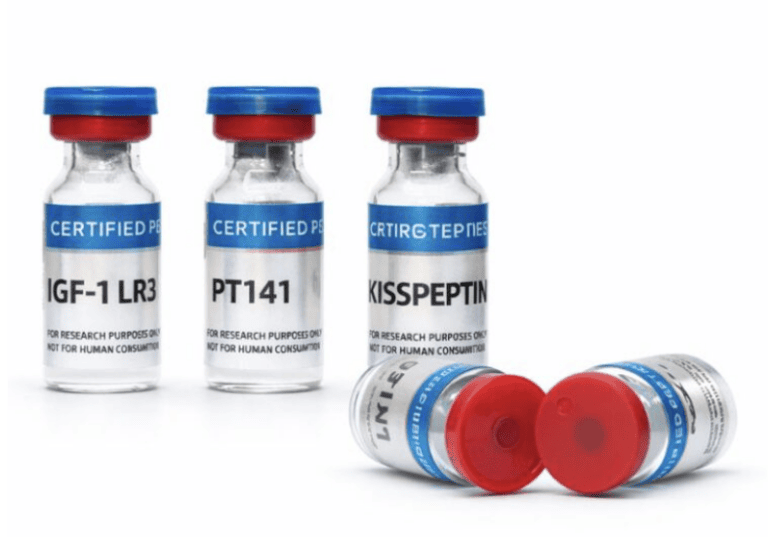
For businesses operating in specialist scientific markets, reaching the right audience online can be challenging. Research peptide suppliers are no exception. With laboratories, research organisations and scientific professionals increasingly using search engines to source materials and investigate compounds, having a strong online presence is an important part of building a successful business.
The research peptide industry is a specialist market where accuracy, product information and supplier credibility all play an important role. Potential customers may search for particular peptide compounds, technical specifications, laboratory materials or suppliers offering research-grade products within the UK.
At Outrank, we understand that SEO is about more than simply appearing in Google. It is about making sure a website reaches the right audience, provides useful information and gives potential customers a clear reason to explore the business further.
A relevant example is Certified Peptides, a UK supplier specialising in high-purity peptides for laboratory and analytical research. With a product range covering multiple research compounds, businesses operating in this sector have opportunities to develop organic visibility through targeted keyword research, well-structured product pages and informative supporting content.
For specialist suppliers, an effective SEO strategy can help connect their websites with researchers actively looking for relevant materials and technical information.
Why Is SEO Important for Research Peptide Suppliers?
Unlike businesses selling everyday consumer products, research peptide suppliers operate within a much more specific market. Their audiences may be smaller, but searches can be highly focused.
Someone researching a particular compound is unlikely to begin with a general search for scientific products. Instead, they may already know the name of the peptide they are investigating and want to find technical information, molecular characteristics or suitable laboratory materials.
These searches create opportunities for specialist websites to appear in front of relevant audiences.
Examples of potential search terms include:
- Research peptides UK
- Research peptide suppliers
- Peptides for laboratory research
- Research-grade peptides
- Peptide technical specifications
- Laboratory peptide compounds
- High-purity research peptides
Each search represents a different type of interest. Some users may be looking for general information about peptides, while others may be searching for details about a particular compound or comparing laboratory suppliers.
At Outrank, we use SEO to help businesses understand these differences and create pages that respond to the information people are looking for.
For a company such as Certified Peptides, this means developing visibility around relevant research compounds while ensuring the website clearly communicates its laboratory-only product offering.
The objective is not simply to generate more website visitors. It is to attract relevant organic traffic from users with a genuine interest in scientific research materials.
Understanding Search Intent in the Research Peptide Industry
One of the most important parts of any SEO strategy is understanding why someone is carrying out a particular search.
Two people searching for information about the same peptide may have very different intentions.
One could be a researcher looking for information about molecular structure and laboratory applications. Another might be looking for technical specifications, storage information or analytical documentation.
Search engines aim to provide results that best match these different requirements.
At Outrank, we research the terms people use, the types of websites appearing in search results and the information those pages provide.
This helps us identify opportunities for product pages, informational articles and supporting resources.
For example, a search for information about a specific peptide’s molecular characteristics may be better served by a detailed educational article. A search for a named research compound from a laboratory supplier may be more relevant to a properly structured product page.
However, search intent also requires care in this industry. Some peptide-related searches involve proposed human uses or medical outcomes, which are not appropriate targets for suppliers offering compounds strictly for laboratory research.
By focusing on legitimate scientific and analytical search intent, specialist suppliers can build an organic presence that accurately reflects their products.
Keyword Research Helps Research Peptide Websites Reach the Right Audience
Keyword research provides the foundation for an effective SEO campaign.
Without understanding which phrases relevant audiences use, businesses can spend time creating pages that attract little meaningful traffic or compete for unsuitable searches.
For research peptide suppliers, keyword planning should consider both broad industry terminology and the individual compounds available through the website.
A supplier may want to improve visibility for general terms such as research peptides UK while also developing pages around specific product names.
For example, Certified Peptides lists research compounds including BPC-157 (10mg), which is presented for laboratory and in vitro research.
A search involving BPC-157 could have several different purposes. Researchers might be investigating its molecular structure, reviewing published scientific literature or looking for technical product documentation.
The website needs to provide information appropriate to those searches without making unsupported claims about the compound.
We also consider keyword competition, search volumes and the relevance of individual terms to the business.
Higher search volume does not automatically mean a keyword is the best target.
A specialist phrase with fewer monthly searches may attract a more relevant audience than a broad keyword associated with several unrelated topics.
By identifying these opportunities, we can build an SEO strategy around the searches that genuinely matter to the business.
Optimising Product Pages for Better Search Engine Visibility
Product pages are an important part of SEO for any e-commerce business, but they are particularly valuable for specialist scientific suppliers.
Unlike conventional retail products, research compounds often require detailed descriptions, technical information and clear documentation.
A well-optimised product page should help search engines understand exactly what is being offered while making it easier for researchers to find the information they need.
At Outrank, we look at several important elements when reviewing e-commerce product pages.
These include page titles, meta descriptions, headings, product descriptions, image information, URL structure and links between related pages.
However, the quality of the information is equally important.
For instance, GHK-Cu (GHK-Copper, 50mg) is listed within the Certified Peptides product range. Its product page provides information about the compound, including molecular details and its intended laboratory research applications.
For a page like this, useful SEO content should focus on helping researchers identify the compound, understand its technical characteristics and access relevant product information.
This could include details about molecular weight, peptide sequence, research context, storage requirements and supporting analytical documentation.
Unique descriptions are particularly important.
If multiple product pages contain almost identical content with only the compound name changed, search engines may struggle to recognise the individual value of each page.
Creating accurate, product-specific information gives each page a clearer purpose and can improve its relevance for appropriate searches.
Building Trust Through Accurate Product Information
Trust is important across e-commerce, but it carries particular significance when businesses supply specialist scientific materials.
Researchers need to know exactly what they are looking at and whether the information provided is relevant to their laboratory requirements.
This is where clear website content becomes especially valuable.
For research peptide suppliers, useful information can include product identification, molecular characteristics, purity testing information, batch traceability and laboratory handling requirements.
Certified Peptides states that its research products are supplied with quality verification information and batch identification. Making this information easy to find helps potential customers assess the supplier’s products and documentation.
From an SEO perspective, well-organised technical information also helps search engines understand the subject of each page.
At Outrank, we encourage businesses to focus on accurate, useful content rather than filling pages with repeated keywords.
For scientific suppliers, this is particularly important because claims need to be supported by reliable information.
Research-only compounds should be clearly distinguished from approved medicines, with no suggestion that they are suitable for human or animal administration.
A website that communicates its product limitations and provides accessible technical information can offer visitors a more useful experience while supporting relevant organic search visibility.
How Informational Content Can Support Research Peptide SEO
Product pages are only one part of a successful SEO strategy.
Informational articles provide opportunities to answer the questions researchers ask before examining or sourcing laboratory materials.
For specialist scientific websites, this content should focus on factual explanations and technical subjects related to the products supplied.
Possible article topics include understanding peptide molecular structures, interpreting certificates of analysis, peptide stability in laboratory environments and the differences between research-grade materials.
A supplier could also publish educational content explaining the terminology used in laboratory peptide research.
For example, a scientific article could discuss the research background of Semax (10mg), including its molecular characteristics and the areas of experimental research in which the compound has been studied.
The purpose of such an article should be to provide accurate scientific information rather than promote unapproved medical applications.
At Outrank, we view content marketing as an opportunity to answer relevant questions while improving the overall usefulness of a website.
A collection of informative articles can help a business cover its specialist subject in more depth.
These articles can also support product pages by explaining technical concepts that would otherwise make individual product descriptions unnecessarily long.
When educational resources and product information work together, visitors can move between general explanations and more detailed technical pages.
This creates a clearer website experience and gives search engines more information about the subjects covered.
Why Internal Linking Matters for Research Peptide Websites
Internal linking is another important part of SEO that is sometimes overlooked.
An internal link connects one page of a website to another page on the same domain.
These links help visitors discover related information and allow search engines to understand how different pages connect.
For a research peptide supplier, internal links might connect educational articles with product specifications, glossary entries, handling information and related scientific resources.
For example, an article explaining peptide chemistry could link to relevant product pages where visitors can find molecular data about individual compounds.
A technical article discussing mitochondrial research could, where scientifically appropriate, reference a compound such as SS-31 (Elamipretide, 10mg) and direct readers to its research product information.
At Outrank, we recommend building these connections naturally.
Links should help readers find additional information rather than simply inserting product names into unrelated content.
The anchor text, which is the clickable wording of a link, should clearly describe the destination page.
A good internal linking structure also prevents important pages from becoming difficult to find.
When product pages, category pages and supporting resources connect logically, search engines can discover and understand the website more effectively.
For specialist e-commerce businesses with growing product ranges, this becomes increasingly important.
Creating a Clear Website Structure for Scientific E-Commerce
Website organisation plays an important role in both SEO and user experience.
A research peptide website may contain product listings, individual compound pages, technical resources, research articles and information about the supplier.
Without a clear structure, visitors can struggle to locate the information they need.
Search engines may also find it more difficult to understand which pages are most relevant to particular queries.
At Outrank, we look at how a website is organised and how visitors move between its different sections.
For example, the Certified Peptides product range brings together the research compounds available through the website.
For websites with extensive product catalogues, carefully planned categories can help organise products by appropriate scientific characteristics or research subject areas.
However, categories should only be created when they provide a genuine benefit to users.
Creating multiple pages targeting almost identical keywords can lead to unnecessary duplication.
Instead, each important page should have a clear purpose and contain information that distinguishes it from other sections of the website.
A logical website structure makes browsing easier for visitors while giving search engines clearer information about the relationship between individual pages.
Technical SEO Helps Search Engines Access Important Pages
Even well-written content can struggle to perform if technical problems prevent search engines from accessing or understanding it.
This is why technical SEO forms an important part of our approach at Outrank.
When assessing an e-commerce website, we look for problems that could affect crawling, indexing and overall website performance.
These can include slow-loading pages, broken links, duplicate content, incorrect redirects, missing metadata and pages that are difficult to access on mobile devices.
Scientific e-commerce websites may also contain numerous product variations and supporting information pages, making technical organisation especially important.
We use tools such as SEMrush to identify technical issues and understand which improvements should be prioritised.
For example, several pages with similar titles may need reviewing to make their individual subjects clearer.
Similarly, product pages that are not linked properly from the main website may be harder for visitors and search engines to discover.
Structured data can also help search engines interpret relevant information about a website and its products when implemented correctly.
Technical SEO does not guarantee higher rankings, but it helps remove problems that could prevent useful pages from performing as effectively as possible.
By combining technical improvements with accurate content and clear website organisation, businesses can build stronger foundations for organic search.
Building Website Authority Through Relevant Backlinks
Backlinks are links from other websites pointing towards a particular domain.
They can contribute to how search engines assess websites, although the relevance and quality of the linking pages matter far more than simply accumulating large numbers of links.
For specialist scientific businesses, relevant links may come from credible industry publications, suitable business directories, research-focused resources or genuinely useful editorial articles.
At Outrank, we focus on building links that make sense within the context of the business.
A research peptide supplier is unlikely to benefit from appearing across hundreds of unrelated websites simply to increase its backlink count.
Instead, relevant editorial mentions and links from suitable industry resources can help improve the website’s presence online.
Informative technical content can also create opportunities to earn links naturally.
For example, a well-researched explanation of laboratory peptide terminology or analytical documentation may be useful to other websites discussing similar scientific subjects.
The important consideration is whether the link provides genuine value and appears within relevant content.
Any promotional placements should also be clearly identified, with appropriate link attributes applied in line with search engine guidance.
Measuring the Success of a Research Peptide SEO Strategy
SEO requires ongoing assessment.
Publishing new pages and improving existing content are important activities, but businesses also need to understand whether those changes are contributing to better organic search performance.
At Outrank, we use performance data to identify opportunities, measure progress and guide future work.
Google Search Console can provide information about the search queries generating impressions and clicks, while analytics tools can help assess how visitors interact with the website.
Keyword tracking can also show how important pages are performing for selected search terms.
For research peptide suppliers, useful performance measures may include organic visibility for relevant scientific searches, visits to product information pages, engagement with educational content and growth in appropriate non-branded search traffic.
We also consider whether individual pages are attracting the audience they were designed to reach.
A page receiving more traffic is not necessarily performing better if those visitors are searching for information outside the supplier’s intended market.
For specialist businesses, relevant traffic is often more useful than simply attracting the highest possible number of visitors.
Regular performance reviews allow us to identify which subjects deserve further attention and where additional optimisation may be beneficial.
Why a Long-Term SEO Strategy Matters for Research Peptide Suppliers
Organic search performance rarely improves through a single change.
A successful SEO strategy requires consistent work across website content, product information, technical performance and the overall structure of the site.
This is particularly important for specialist industries where search terminology can be complex and where accuracy matters.
At Outrank, our approach begins with understanding the business, its products and the people it wants to reach.
We then consider the keywords that are relevant to its market, the content required to answer those searches and the technical improvements that could help search engines understand the website.
For a specialist supplier such as Certified Peptides, this could involve improving the information presented on existing product pages, developing educational resources and strengthening the connections between related sections of the website.
It also means regularly reviewing search performance and responding to new opportunities as the website develops.
Rather than treating individual keywords in isolation, we look at how the full website can provide useful information across the different stages of scientific research and supplier evaluation.
Over time, this approach can help establish a clearer online presence and support organic visibility for relevant searches.
Supporting Specialist Businesses With SEO at Outrank
SEO is valuable for businesses across a wide range of industries, but the approach needs to reflect the market in which each company operates.
For research peptide suppliers, this means understanding specialist search behaviour, focusing on accurate product information and making technical resources easier to discover.
A company such as Certified Peptides illustrates how a specialist scientific supplier can benefit from a carefully planned SEO approach that connects product pages with useful research information.
From keyword research and technical audits to e-commerce optimisation and content development, every part of the website has a role to play.
At Outrank, we work with businesses to identify their organic search opportunities and develop practical strategies designed around their products, services and audiences.
Our aim is to help businesses become more visible for the searches that matter while ensuring their websites remain useful, informative and easy to use.
Whether a company operates in scientific supplies, specialist e-commerce or another competitive industry, the foundations of effective SEO remain the same.
The right content, a clear website structure and ongoing optimisation can help businesses reach the people who are genuinely looking for what they offer.
For research peptide suppliers, that means connecting with appropriate scientific and laboratory audiences through accurate information and relevant organic search visibility.