


The way people research vitamins and supplements has changed considerably.
Customers are no longer limited to choosing between the products they see on the shelves of their local supermarket, pharmacy or health shop. Search engines give people access to hundreds of different brands, products and sources of information before they decide what to buy.
Someone might begin by searching for a daily multivitamin. Another person may be comparing vitamin D products, while a parent could be looking for vitamins designed specifically for children.
Each search creates an opportunity for a vitamin brand to be discovered.
At Outrank, our role is to make sure the businesses we work with have the best possible opportunity to appear when relevant searches take place.
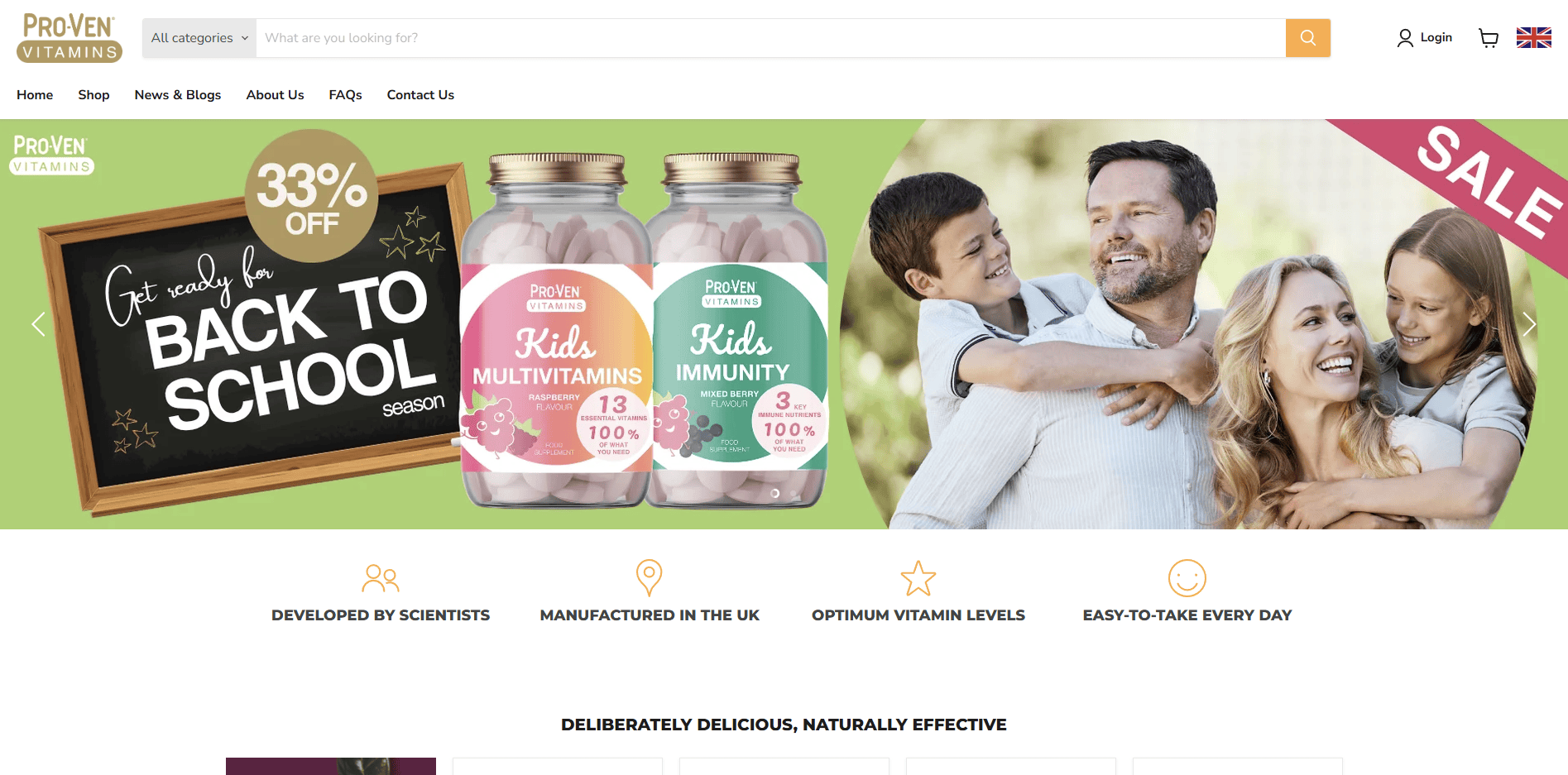
A good example is ProVen Vitamins, a UK vitamin brand offering chewable vitamin products for adults and children.
For a business operating within the vitamin and supplement sector, SEO is about much more than ranking a homepage.
Customers can enter the website through product searches, nutritional questions, comparison searches and informational articles. A successful SEO strategy needs to consider all of these routes while ensuring the website remains clear, useful and easy for both customers and search engines to understand.
Why Is SEO So Important for Vitamin and Supplement Brands?
Competition within the vitamin market is substantial.
Customers searching online can find established household names, specialist supplement companies, pharmacies, supermarkets and newer direct-to-consumer brands within the same set of search results.
This makes search visibility particularly important.
A customer does not necessarily begin their search by typing the name of a vitamin company they already know. They may search for something much broader, such as chewable multivitamins, children’s vitamins, vitamin D tablets or vitamins for everyday use.
These searches give brands an opportunity to reach customers before they have decided which company to buy from.
SEO allows us to build visibility around the products a company sells as well as the questions its potential customers are asking.
For ProVen Vitamins, this means creating a website that can be found by people who already recognise the ProVen name while also reaching those who are simply looking for the type of products the business provides.
That distinction is important.
Branded searches are valuable, but non-branded searches can introduce a company to an entirely new audience.
Understanding How People Search for Vitamins
Keyword research is one of the first areas we consider when developing an SEO campaign.
We want to understand the language customers actually use.
A vitamin company might describe a product in one particular way internally, but customers may search using several different terms. Someone looking for an adult multivitamin could search for daily multivitamins, chewable vitamins for adults, multivitamin tablets or adult vitamins.
Search intent can also vary considerably.
Someone researching whether they need vitamin D is at a different stage from somebody specifically searching for chewable vitamin D tablets.
Both searches could eventually lead to a purchase, but they require different types of pages.
At Outrank, we use keyword research to separate informational searches from searches showing clearer commercial intent.
Commercial searches are usually better matched with product and category pages. Questions and broader research topics can be answered through articles, guides and supporting content.
Building the website around these differences gives each page a clear purpose.
Product Pages Need to Be Built Around Search Intent
Product pages are some of the most important pages on any vitamin e-commerce website.
They need to do two jobs.
Firstly, they need to give search engines enough context to understand exactly what is being sold.
Secondly, they need to give potential customers the information they need before deciding whether the product is right for them.
This is where detailed on-page SEO becomes important.
Page titles, headings, written content, product descriptions, image information, internal links and metadata can all contribute towards helping a search engine understand the purpose of a page.
Take ProVen’s Adults Chewable Multivitamin Tablets, for example.
The page has a clear commercial purpose. Someone landing there is likely to be considerably closer to making a purchase than someone reading a general article about multivitamins.
The same principle applies to the Kids Chewable Multivitamin Tablets.
Although both products sit within the wider multivitamin category, the intended customer and search behaviour surrounding each product are different.
Creating clear individual pages allows a vitamin brand to target those differences instead of expecting one general vitamins page to rank for every possible search.
Specific Products Can Target Specific Search Demand
A strong e-commerce website should make it easy for search engines to identify the individual products and categories available.
This becomes particularly important when a company has more targeted products.
ProVen Vitamins, for example, also offers Chewable Vitamin D Tablets.
A customer searching specifically for vitamin D has already narrowed their requirement considerably compared with someone searching for vitamins generally.
That means the content surrounding that product should reflect the more specific search.
The same applies to the Kids Chewable Immunity Tablets with Vitamin C and Vitamin D.
Searches surrounding children’s vitamins, vitamin C, vitamin D and immune support can create several relevant routes through which customers discover a product.
Our role as an SEO agency is to identify those routes and make sure the website contains the right pages to support them.
We do not want several pages competing for exactly the same term. Instead, every important product and supporting page should have a defined search purpose.
Informational Content Can Reach Customers Earlier
Not every person searching for information about vitamins is ready to buy something immediately.
Many customers begin with a question.
They might want to know what a particular vitamin does, whether certain vitamins are suitable for different age groups or what they should look for when comparing products.
This is where blog content can become an important part of an SEO strategy.
Rather than publishing articles simply to keep the blog active, we can plan topics around genuine searches that potential customers are already making.
The important part is connecting informational content with the commercial areas of the website.
An article discussing vitamin D can naturally direct interested readers towards a suitable vitamin D product.
Content about children’s vitamins can connect with relevant children’s products.
A guide to multivitamins can help customers understand the category before directing them towards individual options.
This creates a journey through the website.
The article brings the customer in through an informational search, answers their question and then provides a logical route towards related products if they want to learn more.
Vitamin Content Needs to Put Accuracy First
Health and nutrition content requires particular care.
Customers need useful information that is written clearly and responsibly.
For us, that means SEO cannot come at the expense of accuracy.
Trying to force large numbers of keywords into an article does not make the content more useful. Neither does producing large volumes of shallow content covering every possible vitamin-related search.
The objective should be to answer the query properly.
That means understanding what someone wants to know, covering the subject clearly and making it easy for them to find further information when needed.
For vitamin brands, content can also help demonstrate knowledge of the products and ingredients they sell.
Clear product information, ingredient details, instructions, frequently asked questions and supporting educational content can all contribute towards a website that is genuinely useful to visitors.
That is the type of content we want to build at Outrank.
SEO works best when optimisation supports good content rather than replacing it.
Building Wider Relevance Around Important Products
A website does not have to rely entirely on its product pages to rank for important subjects.
Supporting content can strengthen the wider section of the website.
If vitamin D is an important product category, for example, we can research the questions people ask around vitamin D and create useful supporting articles.
Those articles can then connect back towards the relevant product pages.
Over time, the website begins to contain a much broader collection of useful information around the subjects most closely related to its products.
The same approach could be taken with adult multivitamins, children’s vitamins or immune support.
This gives the website more opportunities to appear across the research process.
Instead of only competing when somebody makes a very specific product search, the brand can also become visible when people begin researching the wider subject.
Internal Linking Connects Products and Content
As more pages are added to an e-commerce website, internal linking becomes increasingly important.
An internal link connects one page of a website with another.
From a customer’s perspective, these links help them move between related information.
From an SEO perspective, they help create clear relationships between pages.
An article about children’s nutrition might link towards a relevant children’s multivitamin product.
A guide discussing vitamin D could link towards the main vitamin D product.
Supporting articles can connect with related guides while important category and product pages can direct customers towards useful educational information.
We want these links to feel natural.
There is little benefit in adding internal links simply because an SEO checklist says they should be there. The link needs to help the person reading the page.
When internal linking is planned properly, the website becomes much easier to move around and important commercial pages become connected with the informational content supporting them.
Website Structure Matters for E-Commerce SEO
Vitamin websites can become complicated surprisingly quickly.
A brand may start with only a handful of products but gradually add new vitamins, ranges, categories, bundles, articles and informational pages.
Without a clear structure, important products can become buried within the website.
At Outrank, we look at how the complete site fits together.
Customers should be able to move logically from the homepage to a product category and from that category to an individual product.
Supporting articles should also connect naturally with the parts of the website they discuss.
A clear structure makes the site easier for customers to use while helping search engines discover and understand individual pages.
It can also reduce the risk of several pages targeting almost identical searches.
Planning the structure early gives every page a reason to exist.
Technical SEO Supports the Content
Even strong product descriptions and useful articles can struggle if technical problems are preventing search engines from properly accessing the website.
Technical SEO therefore forms another important part of the campaign.
At Outrank, we regularly audit websites to identify problems that could affect crawling, indexing or usability.
This can include broken links, redirect problems, duplicated page titles, missing metadata, pages that cannot be indexed correctly, slow-loading content and poor internal linking.
E-commerce websites can create additional challenges because products may appear within several collections, filters can generate extra URLs and products can move in and out of stock.
These issues need to be monitored.
Our aim is not simply to produce an audit filled with warnings. We prioritise the issues that could have a genuine impact on the performance of the website and work through them in a sensible order.
Technical SEO creates the foundation that allows the rest of the strategy to work properly.
Product Information Can Help Search Engines Understand the Website
Search engines need clear information about e-commerce products.
Alongside the visible content customers read, websites can use structured product information to help search engines understand details such as the product name, price, availability and reviews.
This is often referred to as product structured data.
When implemented correctly, it can give search engines clearer information about what is available on an individual product page.
For an e-commerce brand, this should form part of the wider technical SEO strategy rather than being treated as a standalone solution.
Good product information will not compensate for weak pages, poor site structure or unhelpful content.
It works best when the whole website is properly planned.
SEO Should Support the Entire Customer Journey
One of the biggest benefits of SEO is the ability to reach people at several different stages.
A potential customer could first discover ProVen through an article answering a vitamin-related question.
They may return later after searching for a specific type of vitamin.
They could then compare an individual product before eventually making a purchase.
SEO can support each one of those interactions.
This is why we do not view product SEO and content SEO as completely separate activities.
They should work together.
Informational content introduces customers to the website.
Product and category pages answer commercial searches.
Internal links connect the two.
Technical SEO makes sure search engines can access everything properly.
Off-site SEO can then help strengthen the wider visibility and reputation of the website.
Off-Site SEO Can Strengthen a Vitamin Website
SEO does not stop when we finish working on the website itself.
Search engines also encounter a brand elsewhere online.
Links from other websites, business references, relevant publications and wider mentions can all contribute towards the online presence surrounding a company.
This is where off-site SEO becomes important.
At Outrank, we focus on relevant opportunities rather than simply trying to build the largest possible number of backlinks.
Quality matters more than volume.
For a vitamin brand, the most useful references are those that make sense within the wider context of the business.
A natural mention from a credible website is considerably more valuable than large numbers of unrelated links created solely for SEO purposes.
The objective is to strengthen the website’s wider online presence while continuing to improve the pages customers actually land on.
SEO Helps Vitamin Brands Compete Beyond Their Own Name
Someone who searches directly for ProVen Vitamins already knows the brand exists.
That is useful traffic, but it only represents one part of the opportunity.
The larger SEO opportunity is reaching people who have not yet decided which vitamin brand they want to buy from.
They may be searching for children’s chewable vitamins.
They could be looking for adult multivitamins.
They may want vitamin D tablets or could simply be researching different options before deciding what they need.
Appearing for these searches introduces the business to customers who might never have encountered it otherwise.
That is why non-branded search visibility is so important for growing e-commerce businesses.
It allows SEO to become a customer acquisition channel rather than simply a way of making sure the company appears when somebody already knows its name.
The Best Vitamin SEO Strategies Work Across the Whole Website
There is rarely one SEO change that transforms an e-commerce website.
The best results usually come from many improvements working together.
Keyword research tells us what customers are searching for.
Product optimisation gives search engines relevant pages to show.
Informational content allows the website to answer a wider range of searches.
Internal linking connects those pages.
A clear website structure helps customers and search engines move through the site.
Technical SEO removes problems that could restrict crawling and indexing.
Product information gives search engines additional context.
Off-site SEO strengthens the wider presence of the domain.
Every part has a role.
At Outrank, we bring those areas together rather than treating them as separate jobs.
We look at what the business sells, what its customers search for and what needs to change for the website to become more visible for those searches.
Why SEO Is a Long-Term Investment for Vitamin Brands
Organic search gives vitamin and supplement brands access to people who are actively looking for information and products.
That makes it particularly valuable.
A customer searching for a children’s multivitamin has already expressed an interest in that type of product.
Someone researching vitamin D has already entered a relevant subject area.
The purpose of SEO is to make sure the right pages have the opportunity to appear when those searches happen.
Using ProVen Vitamins as an example shows why that requires more than adding keywords to product descriptions.
It requires careful keyword research, useful product pages, accurate supporting content, sensible internal linking, clear site structure, technical maintenance and ongoing work outside the website.
Each part supports the others.
At Outrank, that is how we approach SEO for vitamin and supplement brands.
We build the campaign around how real customers search, create and improve the pages needed to meet that demand and connect the complete website into a clear SEO strategy.
Because ranking higher only matters when the people finding the website are the people most likely to be interested in what the business has to offer.