
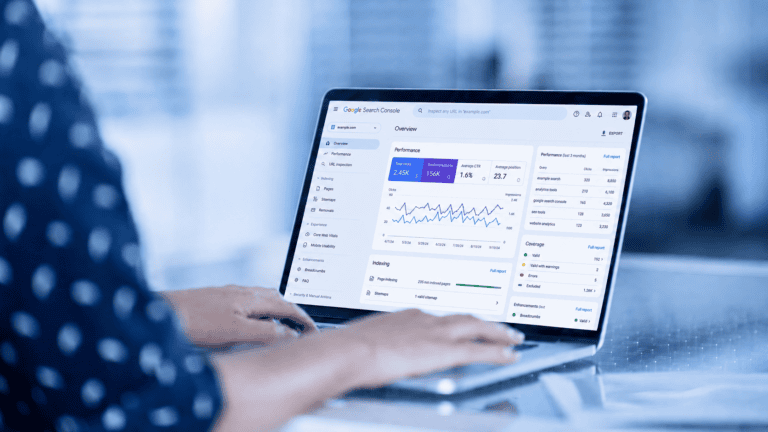
Google has expanded Search Console to help businesses understand how their social media and video content performs across Google Search, Discover and Google News.
The new platform properties feature is now available globally and supports content published on Instagram, TikTok, X and YouTube. It gives marketers a clearer view of how posts and videos attract visibility beyond the platforms where they were originally published.
For businesses investing in social media, video marketing and SEO, this update could make it easier to connect activity across different channels and understand which content attracts people through Google.
What Are Platform Properties in Google Search Console?
Platform properties allow you to connect supported social media and video profiles to Google Search Console.
Once connected, you can review how content from those profiles performs when it appears across Google Search, Discover and Google News.
This means Search Console is no longer limited to measuring content published on your own website. Businesses can now gain more insight into the Google visibility generated by posts, videos and other content hosted on third-party platforms.
The currently supported platforms include:
- TikTok
- X
- YouTube
Google originally announced the feature earlier in July 2026 before making it available globally on 29 July 2026.
Why Does This Google Search Console Update Matter?
Search behaviour has changed.
People do not always discover a business by visiting its website first. They may find a YouTube video, TikTok post, Instagram profile or social media discussion directly within Google’s search results.
Until now, understanding that journey has often involved pulling together information from several different platforms. Even then, it could be difficult to see which posts were attracting attention specifically through Google.
Platform properties help close that gap.
Businesses can use the data to see which social posts and videos gain search visibility, which topics attract interest and how different content formats perform.
This can help SEO and social media teams make better decisions together rather than treating website content, social content and video as completely separate strategies.
How Can You Understand Your Search Audience?
The Insights report can show the query groups sending people from Google to your social media and video content.
You can use this information to identify:
- Your strongest search themes
- Queries that are becoming more popular
- Queries that are losing visibility
- Topics your audience wants to learn more about
These insights can support future video topics, captions, hashtags and wider content ideas.
For example, a business may discover that a short educational video attracts traffic for a specific customer question. That topic could then become a longer video, a detailed blog, a service page or a wider social campaign.
The value comes from using real search behaviour to guide future content rather than relying only on assumptions or platform engagement figures.
Can You Identify Trending Social Content?
Google Search Console’s 24-hour performance filter can help you spot sudden increases in search traffic to recent content.
A spike may indicate that a post has become relevant because of a current event, seasonal trend or growing search topic.
Once you identify that activity, you could:
- Reshare the content across other platforms
- Create a follow-up post or video
- Add more information to your website
- Link the topic to a relevant service
- Support it with paid social activity
Google specifically suggests using the 24-hour filter to identify recent content that is gaining momentum through Search.
Acting quickly can help your business make more of that interest while the topic remains relevant.
How Can You Compare Performance Across Platforms?
Businesses can export performance data from different platform properties and combine it within one spreadsheet.
This makes it possible to compare content from YouTube, Instagram, TikTok and X side by side.
You might find that short videos generate more Google impressions on one platform while longer educational content attracts more clicks on another.
These comparisons can help you decide:
- Where to focus your resources
- Which formats support search visibility
- Which topics work across several platforms
- Whether content should be adapted for each channel
- Which platforms contribute most to your wider marketing goals
The goal should not always be to post the same content everywhere. Better data can help you understand how each platform supports a different part of the customer journey.
Can Older Social Media Content Become Valuable Again?
Social media content does not always stop performing when it disappears from the top of a feed.
An older video or post may begin attracting new search visibility weeks or months after publication. Search Console can help you identify content that is regaining traction.
You could then pin the post, reshare it, update the caption or create a follow-up piece.
Google also recommends using Search Console annotations to record external changes, such as updating a YouTube title or rewriting a TikTok caption. You can then review whether those changes affected search performance over time.
This gives marketers a more structured way to test changes and improve existing content rather than constantly starting from scratch.
How Can You Compare Short-Form and Long-Form Video?
Platform properties can also help you compare different content formats.
Using filters and comparison tools, you may be able to review how short-form videos perform against longer videos, playlists or other groups of content.
Short-form content may generate fast visibility around trending topics. Longer videos may attract fewer clicks initially but continue bringing in traffic for a longer period.
Neither format is automatically better.
The right approach depends on your audience, subject and business goals. Search Console data can give you a clearer understanding of which formats support those goals.
Does Social Media Content Now Affect SEO?
The update does not mean that every social media post will improve your website rankings.
However, it does demonstrate how closely search, social media and video discovery now overlap.
Your audience may find your business through several different types of content before visiting your website or making an enquiry.
A strong digital strategy should therefore consider how these channels work together.
Your website can provide detailed, trusted information, social media can build awareness and engagement. Video can explain complex topics and demonstrate expertise, Google Search can connect people with each of these formats at different stages of their journey.
The new reporting helps businesses understand more of that wider picture.
What Should Businesses Do Next?
Businesses that actively publish content on supported platforms should consider setting up platform properties within Google Search Console.
Once data becomes available, avoid looking only at total clicks and impressions.
Review which topics attract attention, which posts are gaining momentum and how performance differs across platforms and formats.
You can then use those findings to shape your SEO, social media and video strategy.
The most valuable outcome will come from connecting the data to action. That could mean improving existing posts, expanding successful topics, creating website content around audience questions or adjusting the balance between short-form and long-form video.
Bring Your SEO and Social Media Strategy Together
Search visibility no longer belongs only to traditional website pages.
Your videos, social posts and wider digital presence can all contribute to how customers discover and understand your business.
Google’s new platform properties provide another way to measure that visibility and make more informed marketing decisions.
At Outrank, we bring SEO, content and social media together to help businesses build a stronger presence across the platforms their customers use.
Whether you want to improve your Google visibility, develop a more effective social media strategy or turn content into measurable business growth, our team can help.
Get in touch with Outrank to discuss how a connected digital marketing strategy could support your business.