

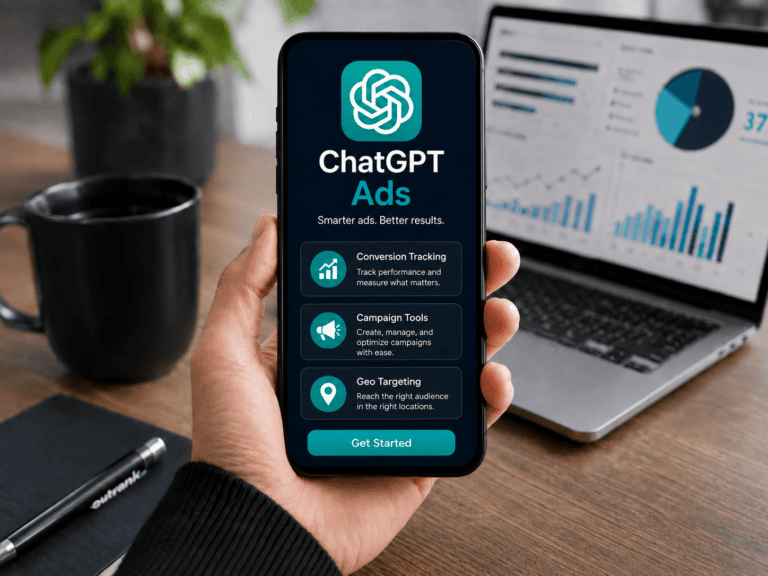
OpenAI is continuing to develop ChatGPT Ads, introducing new tools designed to give advertisers greater control over campaign performance, targeting, measurement and management.
The latest additions include conversion-focused bidding, geographic exclusions, improved budget controls and bulk campaign tools. These features move the platform closer to the capabilities businesses already expect from established paid advertising channels.
For advertisers, the updates could make ChatGPT a more practical performance marketing platform rather than simply another place to build brand awareness.
What Has Changed Within ChatGPT Ads?
ChatGPT Ads remains a developing platform, but OpenAI has continued to expand the tools available through its Ads Manager Beta.
Advertisers can now access features that help them optimise campaigns around specific actions, control where ads appear and manage larger numbers of campaigns more efficiently.
The latest developments include:
- Conversion-optimised cost-per-click campaigns
- Geographic targeting and exclusions
- Average daily campaign budgets
- Improved conversion measurement
- Bulk campaign creation and editing tools
- More detailed reporting and campaign management options
Together, these updates give advertisers more control over how campaigns spend, who they reach and which results they prioritise.
How Does Conversion-Focused Bidding Work?
One of the most important updates is the introduction of conversion-optimised cost-per-click bidding, also known as oCPC.
This campaign type allows advertisers to select a conversion action they want ChatGPT Ads to prioritise. The platform can then optimise ad delivery towards users who may be more likely to complete that action.
Advertisers still pay for valid clicks, but campaign delivery focuses on generating a selected result, such as:
- Completing a purchase
- Submitting an enquiry
- Registering for an account
- Completing another supported conversion event
This represents an important step for ChatGPT Ads. Advertisers increasingly need to understand whether their campaigns produce leads, sales and revenue rather than simply generating traffic.
However, businesses need to set up conversion tracking before they can use conversion-optimised campaigns. OpenAI currently supports conversion measurement through its JavaScript Pixel, Conversions API or a combination of both.
Why Does Better Conversion Tracking Matter?
Reliable conversion tracking gives advertisers a clearer view of what happens after somebody clicks an ad.
Without it, a campaign may appear successful because it generates clicks, even when those visitors fail to enquire, register or make a purchase.
ChatGPT Ads can measure actions completed within the relevant attribution window and connect eligible conversion events with an ad click. This helps advertisers compare campaigns and understand which messages, audiences and landing pages deliver meaningful results.
Businesses should still review the quality and value of those conversions. A high number of form submissions does not automatically mean a campaign is profitable if the enquiries do not become customers.
Accurate website tracking, CRM data and sales information will remain essential when judging the true return from ChatGPT advertising.
What Do Geographic Exclusions Give Advertisers?
Geographic exclusions allow advertisers to prevent campaigns from appearing in locations they do not serve or do not want to target.
This may sound like a relatively simple feature, but it can make a significant difference to campaign efficiency.
A regional company serving customers in the North East, for example, may not want to pay for clicks from people in areas where it cannot provide its services. Similarly, an ecommerce business may need to exclude countries or regions where it cannot deliver products.
OpenAI’s campaign targeting tools support location controls across countries, regions and designated market areas, although the exact targeting options available may vary by account and market.
Better location control can help businesses reduce irrelevant traffic, protect their budgets and focus spending on the areas most likely to generate customers.
How Will Daily Budgets Improve Campaign Control?
Average daily budgets give advertisers greater control over campaign pacing.
Rather than relying only on a total campaign budget, businesses can set an average amount they are comfortable spending each day. The platform may spend more or less on individual days depending on available opportunities, while working within the wider spending limits applied to the campaign.
This can make planning easier, particularly for smaller businesses working with fixed monthly advertising budgets.
However, advertisers should continue monitoring performance regularly. Automated budget pacing can support campaign delivery, but it cannot replace a clear strategy or careful management.
What Are the New Bulk Campaign Tools?
OpenAI is also improving the tools available for advertisers and agencies managing campaigns at scale.
Its Bulk API allows approved accounts to create or update campaigns, ad groups and ads through a single job. OpenAI states that the tool can process up to 1,000 operations within one submission, although it currently remains in limited preview.
Bulk tools can reduce repetitive manual work when businesses need to:
- Launch several campaigns
- Update multiple ads
- Change budgets across an account
- Manage different products or locations
- Apply changes to several ad groups
These capabilities will be especially useful for agencies, large ecommerce businesses and advertisers managing complex campaign structures.
They also show that OpenAI is building ChatGPT Ads with larger and more sophisticated advertising accounts in mind.
How Are ChatGPT Ads Different From Traditional Search Ads?
Traditional paid search campaigns often begin when somebody enters a short search query into a search engine.
ChatGPT Ads operate within a conversational environment. A user may ask several questions, compare options and refine what they need before seeing a relevant sponsored placement.
This gives the platform more context about the user’s immediate intent.
For advertisers, this could create opportunities to reach people while they actively research a product, service or decision. Ad copy will need to feel useful, relevant and closely connected to the conversation rather than relying on generic promotional messaging.
OpenAI says ads are clearly labelled and kept separate from ChatGPT’s organic answers. It also states that advertisers do not receive access to users’ conversations or personal chat details.
Are ChatGPT Ads Available to UK Businesses?
OpenAI has expanded access to its Ads Manager Beta, but availability can still depend on the advertiser’s country, account and eligibility.
The platform remains in beta, which means its features, formats and requirements may continue to change.
UK businesses should therefore avoid treating ChatGPT Ads as a direct replacement for Google Ads, Microsoft Advertising or paid social campaigns. At this stage, it may work best as an additional channel that businesses test alongside an established paid media strategy.
Early testing can help advertisers understand:
- Which products or services attract interest
- How users engage with conversational ads
- Which messages generate qualified traffic
- How conversion rates compare with other channels
- Whether the platform delivers an acceptable return
Should Your Business Test ChatGPT Ads?
ChatGPT Ads may offer a valuable opportunity for businesses that want to reach customers during the research and decision-making process.
The introduction of conversion bidding, improved measurement, geographic controls and bulk management tools makes the platform more suitable for performance-led campaigns.
That does not mean every business should move budget away from proven channels immediately.
Any test should have a clear objective, reliable conversion tracking and an agreed budget. Advertisers also need landing pages that match the message within the ad and make it easy for visitors to complete the next step.
As the platform develops, businesses that already understand their audience, conversion data and paid media performance will be in the strongest position to test it effectively.
Could ChatGPT Ads Become an Important Paid Media Channel?
ChatGPT Ads is still a new advertising platform, but OpenAI is developing it quickly.
The latest features show a clear shift towards greater automation, measurement and campaign control. These are essential capabilities if OpenAI wants advertisers to treat ChatGPT as a serious performance marketing channel.
Businesses do not need to abandon their existing paid media strategies. However, they should watch how ChatGPT Ads develops and consider where conversational advertising could complement Google Ads, Microsoft Advertising and paid social campaigns.
ChatGPT Ads also connects with several wider areas of digital marketing, a successful campaign needs more than the right budget, which is why Outrank combines PPC management with paid media strategy, conversion tracking, landing page optimisation and clear performance reporting. Our team can also help businesses understand how emerging platforms fit alongside Google Ads, Microsoft Advertising, paid social and their wider digital marketing activity. This joined-up approach helps reduce wasted spend, improve lead quality and make sure every campaign supports your broader growth goals.
At Outrank, we help businesses build paid media strategies around measurable growth rather than clicks alone. Our team can review your existing campaigns, identify new opportunities and make sure your advertising budget focuses on the channels most likely to deliver meaningful results.
Speak to Outrank to discuss your paid advertising strategy.